



Sign up here for Bowman Bulletin
We won't use your mail for anything but news about new Bowman things
Aluminium, the hows, why’s and wherefores.
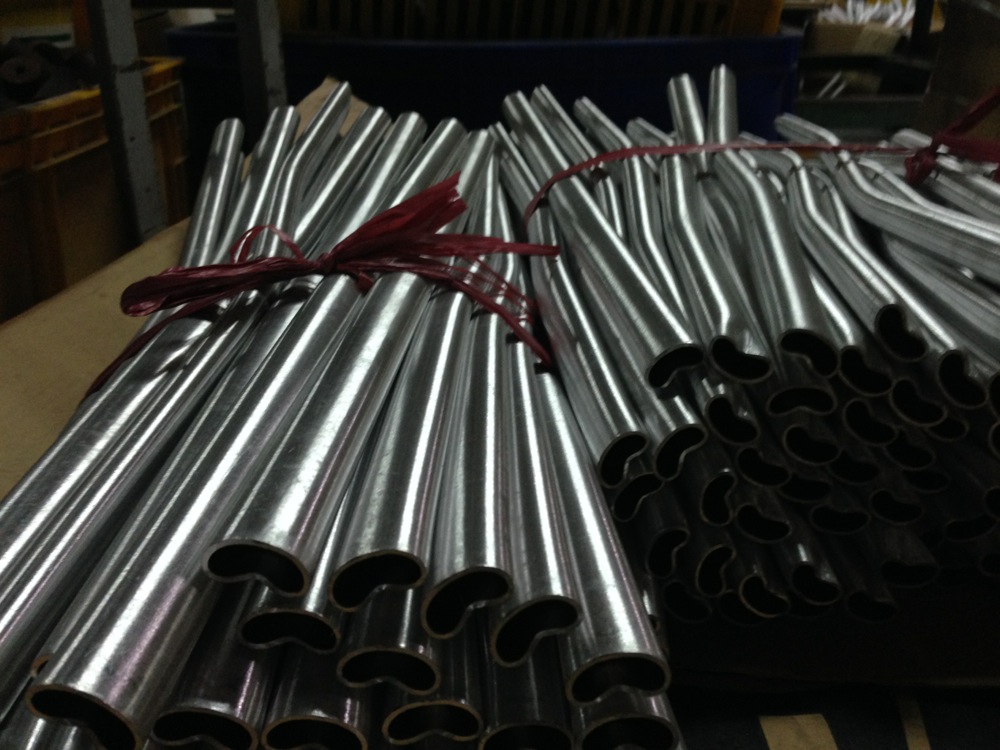
A question we often get asked is “why don’t you do carbon?”
It’s a good question, and one you should ask. However, we feel there’s a good reason to think about the alternatives, and right now, it allows us to actually make the bikes exactly as we want them.
Bikes from the black stuff
A precursor to the the why for aluminium, there is a why not when it comes to the black stuff. Carbon fibre is an awesome material from which to craft a bicycle frame, but only when done very, very well. In our experience, a cheap carbon frame is a waste of the material’s potential, and rarely offers the best ride you can get, for the price.
This cost is a major factor. The raw material cost of top flight carbon runs into many hundreds of pounds, whereas for Aluminium, its close to a quarter of that. The you need to factor in the man power costs. Carbon is laid up by human hands - a labour intensive process that cannot be reduced. But the true cost comes in the tooling. Carbon composite frames need moulds, and these are very, very pricey. Think $25,000 dollars minimum to get all the tooling made for a full size run of very simple frame. Its prohibitively expensive for a new, and small, company like us.
Sure, there is always the option to buy an off the shelf, ‘open mould’ frame and slap some pretty stickers on it, but that is not a route we wanted to take (more on that later). It is also true that you can tune the carbon lay up of these off the shelf products to get ride characteristics that can set your frame apart from others using the same mould, but there are limitations to what you can do. The primary one is geometry. It’s also - outside of the cost - the reason we have taken a different route.
Twists and turns.
The heart of any good frame (in our humble opinion) is handling. This comes down to the numbers on a drawing: seat angle; bottom bracket height; chainstay lengths; fork offset, head angle and trail. These details are what help your bike corner like its on rails when done well. For us, how a bike behaves on a great, technical descent should always be at the core of every Bowman Cycles frame. Sure, its relatively simple to make a bike stiff or light, but one that handles well comes only from the testing on roads that you know well, or that test the handling. The experience of the team behind the bikes, and the passion for sweet handling bikes is a major driving force for us. It can cause us headaches, and delay products, but at the end of the day, we want to make the best frames we can. At risk of repeating ourselves, that means ones that create a grin in the twisty stuff.
Harsh, but (un)fair.
One opinion bandied about is that aluminium frames are harsh. Well, ten years ago, this was true. Fat, oversize aluminium racing frames were brutally stiff. Sure they had some ‘get up and go’ when you stood on the pedals, but hit a pothole or undulation, and you knew about it. However, as with everything (almost), things change. Tubing manufacturers have been constantly evolving the drawing , butting and shaping processes when it comes to aluminium. There have also been a lot of advances in the materials themselves. Alloying elements change the way tubing can be made, and thus have the potential to change the ride characteristics of a frame welded from these modern pieces. It is also worth noting that many of the large manufacturers are starting to reintroduce high end aluminium bikes into their range. As the tubing technology improved, even the biggest players stood up and took notice: Specialized S-Works Allez anyone?
And it goes a little something like this.
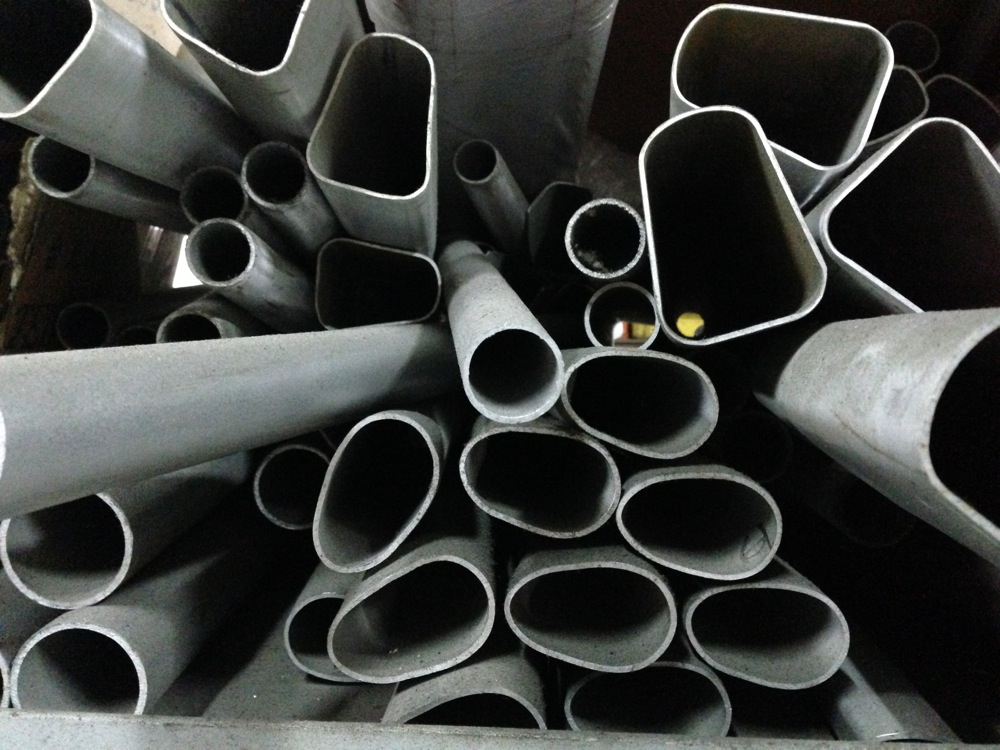
The process for all Bowman frame designs goes something like this. We start with the proverbial ‘fag packet’ sketches and notes on geometry for a frame. Through experience, we know that if you can make a seat and headtube remain parallel under load (think cornering), a bike will pretty much go where you point it. To that end, we choose the diameters for each tube in the front triangle. At this point, we will discuss with the tubing manufacturer and the factory that welds the tubes together, our options for actual tube profiles (the fancy shaping stuff). Once we have settled on a make up that meets our needs, we look at wall thickness, butting options (including butt lengths) to try to maintain a constant feel across the size range. The rear end of the bike - chain and seat stays (and bridges or lack there of) - gets the attention. There are more complications here: tyre clearance; making sure there is room for chainrings and ensuring the frame is able to handle braking loads (disc or caliper), but once these have been considered it is again down to profile and wall thickness to try to ensure the frame will not flex too much under power, nor transmit the vagaries of road surface to harshly. All these small details add up. And, we hope, its this level of consideration that sets our frames apart from some others available.
Back in the real world.
At this point, there is an element of ‘finger in the air’ to the whole process. Decisions may be based on solid engineering and previous experience, but they count for absolutely nothing until you throw a leg over an actual bike. Nothing proves your design process like barreling into an ever tightening left hander at 10mph too fast. This is why we spend a huge amount of time riding the first prototypes we have made.
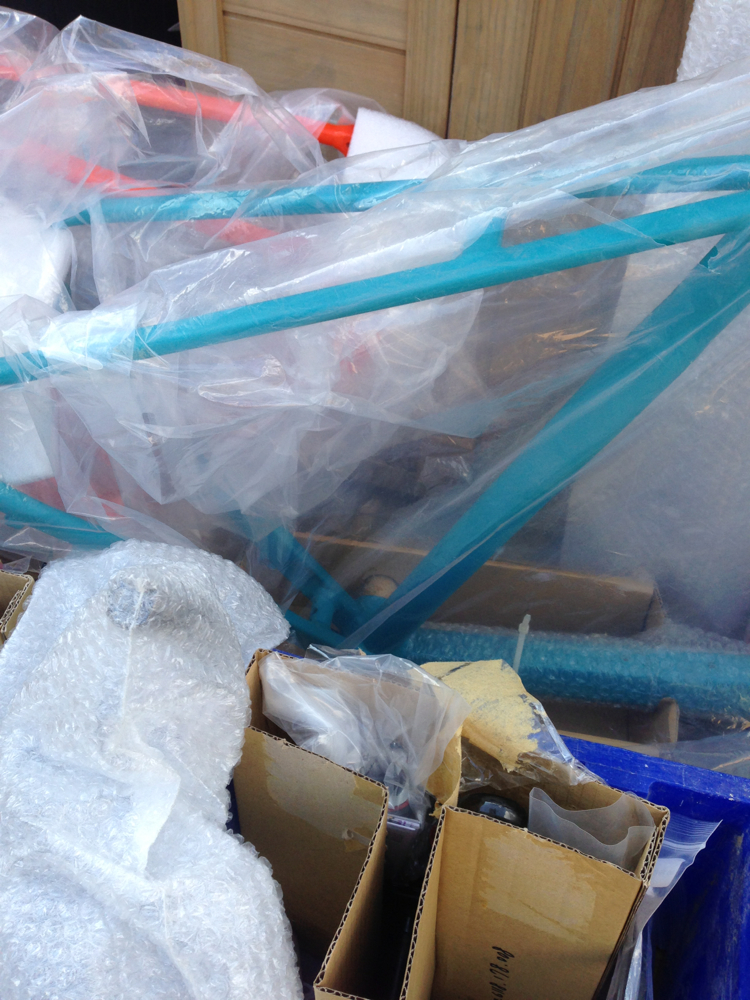
Once a frame drawing is signed off, a prototype, or pre-production sample is made. The 6-12 week wait for these can be excruciating, but its a mixed feeling day when the frame finally turns up. Usually the components have been gathered already, and its a case of building the bike up, and just getting out and riding it. The basic feelings make themselves known pretty much straight away. Within a few miles, you’ll know if the geometry needs tweaking at all. If alls well in that department (and so far it has been - experience has paid off to date), its a case of drilling down more and more into details. Ride quality comes next - can it be improved, what are our options. Last up would be the details, cable routing, dropout fixings, tyre clearance tweaks.
-

- Testing is vital, the fact it can be as inspirational as this is just an added bonus
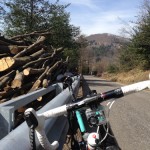



The testing process is long, but one thats both enjoyable and ultimately (we hope) very fruitful
Once we are riding the bikes, discussions with the manufacturer are numerous. Implications of proposed changes; schedules, availability, potential tooling costs for small tweaks to tube profiles all need to be ironed out. With a lead time of 3 months per iteration a minimum, you also need to balance the need to see a full frame with changes, compared to get a tubing sample with a new cable routing option - we did this with our chosen modular cable guide choice on the Pilgrims frame:
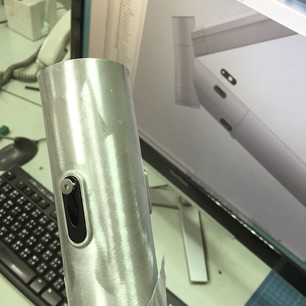
You can go through a couple (or more) iterations of pre production frames before you are happy enough to push the button for production. The process cannot be sped up. The time spent getting every detail correct is what makes for a bike that is a pleasure to live with; riding and testing these mules is invaluable; changes and updates and subsequent retesting cannot be missed. The consequences can be delays, but without every single step being fulfilled, it would not be possible to create a bike we are happy with. Nor one we’d wish to put our name to.
Frame manufacturing Gallery
-
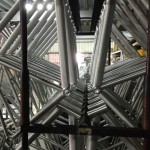
- Frames await their paint
-
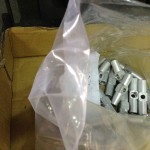
- seatstay bridges ready for mitreing
-
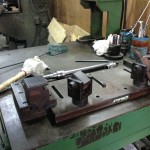
- The alignment table where all frames are checked prior to painting and shipping
- Full size frame drawings are used as guides on the welding tables
-
- Cutting and mitreing machinesneed nitrogen to keep cool
-
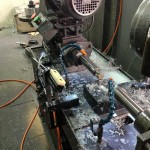
- The BB threading machine
-
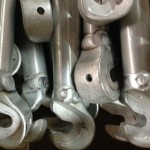
- Chainstays with dropouts, ready for attaching
-
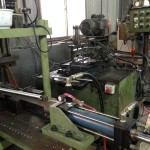
- Tubes are bent and shaped on site, prior to welding
-
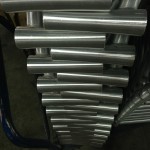
- Front triangles await their rear end
- CNC and threading swarf is all recycled, but always makes for a great photo
Range finding
When we set up the company, and this website, we wanted to let you know what our plans were for the future. Its why we put all of our current and future models on the site from the very beginning. We know this has caused us to disappoint some people, as frames aren’t available, despite being on the site in one form or another. But, that was a decision we made. We feel that it is better you know what we make, and plan to make in the future, and keep everyone informed of the process as it happens and get as excited as we are as production gets nearer.
Get in touch.
Dont forget, we are always available at the end of a phone line (01322 800146), or via email. The people behind the frames will be the ones you talk to on the phone. We’re happy to chat about the current or future product, answer any queries and put the world to rights (within reason). We’re also on Facebook, Twitter and Instagram where you can get in touch. We try to answer as promptly as possible, on the social media stuff, but to be sure, the phone or email are usually better. We look forward to hearing from you, and seeing you out on the road and trails.
Bowman Cycles is a trademark of B B Velo Limited, company number 8933432
All content imagery and intellectual property contained within the content of this website are the property of B B Velo Limited, and no rights in relation to design, trademarks or imagery can be presumed without written permission from the company.
Bowman Cycles: Ride With Spirit.